



5 Best Practices for Extending Your QMS to the Frontline
How manufacturers can close the gap between quality documentation and frontline execution
Many manufacturers have invested meaningfully in Quality Management Systems. Policies are documented. SOPs are written. Audit requirements are tracked. And yet, quality escapes still happen. Inspections get rushed or skipped. New workers execute inconsistently. Audit trails rely on paper that may or may not be complete or collected.
The reason is structural. Traditional QMS platforms are built for documentation governance, not for assisting or directing work. They excel at capturing policies, but they have a gap at the execution layer. They lack the physical act of following those policies on the floor, in real time, by the people doing the work.
Research makes the scale of this gap clear. Only 23% of frontline workers report having the technology they need to do their jobs effectively. Among companies that have attempted to digitalize frontline processes, nearly 70% cite poor adoption as the primary reason for failure. The tools were built for offices, not for the floor.
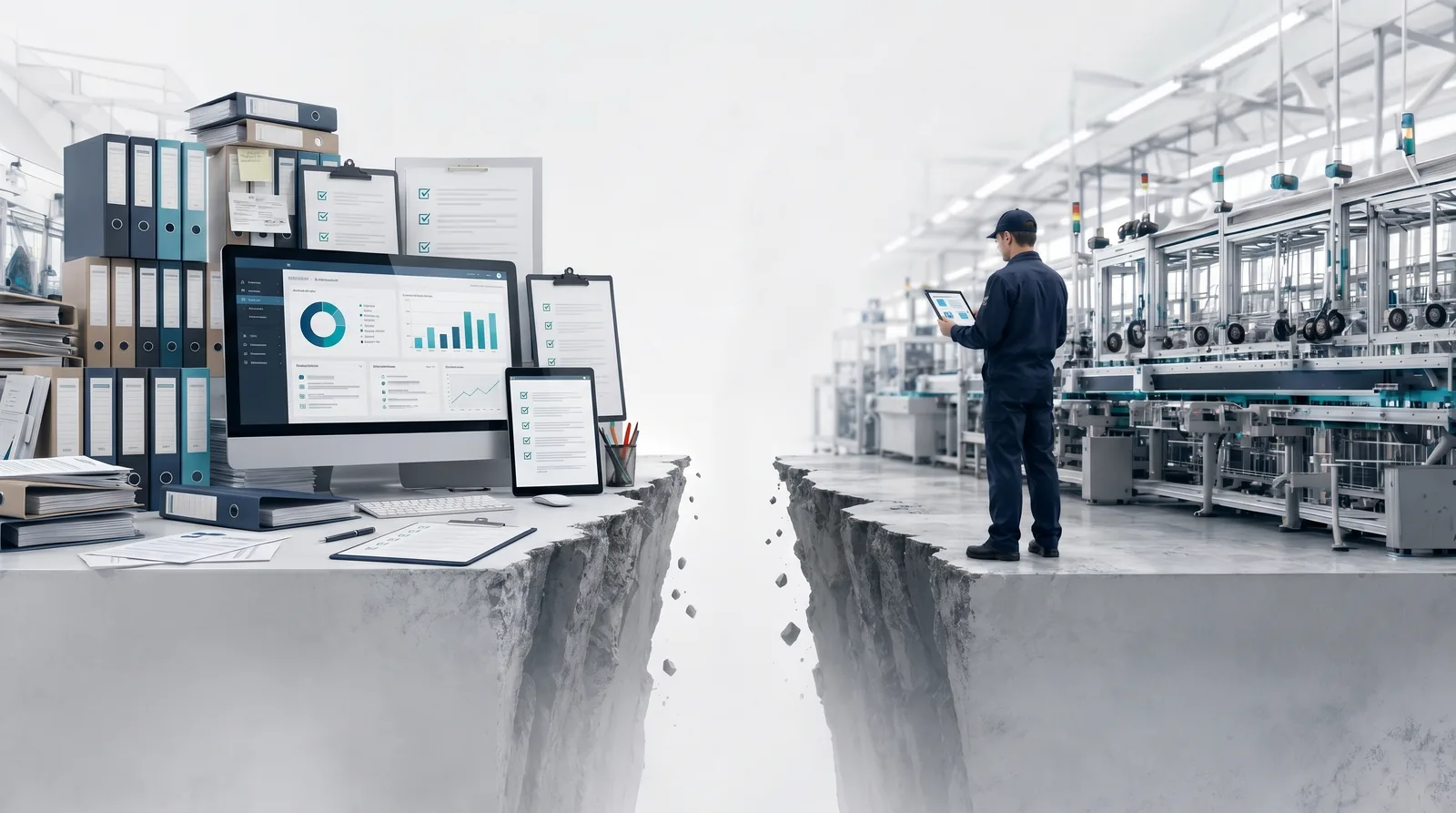
Treat Frontline Execution Tech as Part of Your Quality Architecture
Quality architecture has a well-understood hierarchy: Quality Manual, company policies, standard operating procedures, work instructions. Most QMS platforms manage the upper layers well. Where they fall short is the execution of the architecture — training delivery, real-time inspection guidance, and verified traceability.
That execution layer requires a different kind of system. A frontline platform that is mobile-native, visual, fast enough to use in the flow of work, and capable of capturing data automatically. The QMS and a frontline execution platform are not competing tools. The QMS defines what good looks like. The frontline platform is how those standards get delivered and verified where the work happens.

Map each layer of your quality architecture to the system that can actually guide and enforce it. Most quality gaps live between the SOP definition and the execution layer. No amount of documentation revision will close that gap without a corresponding investment in how work is directed on the floor.
Design for the Worker, Not the Analyst
The most common failure mode in frontline digitalization is building tools that work well for managers but create friction for workers. Text-heavy forms on small screens. Multi-tap navigation to reach a routine inspection. Interfaces that look the same as desktop forms.
When a system makes a worker's job harder — even marginally — workers route around it. They use paper. They skip steps. The data that reaches the quality dashboard no longer reflects what actually happened on the floor.
Effective frontline design starts with the physical reality of the job. Mobility, simple visual interfaces, single-tap inputs, role-based routing that surfaces only what is relevant, and guidance embedded in the workflow itself.
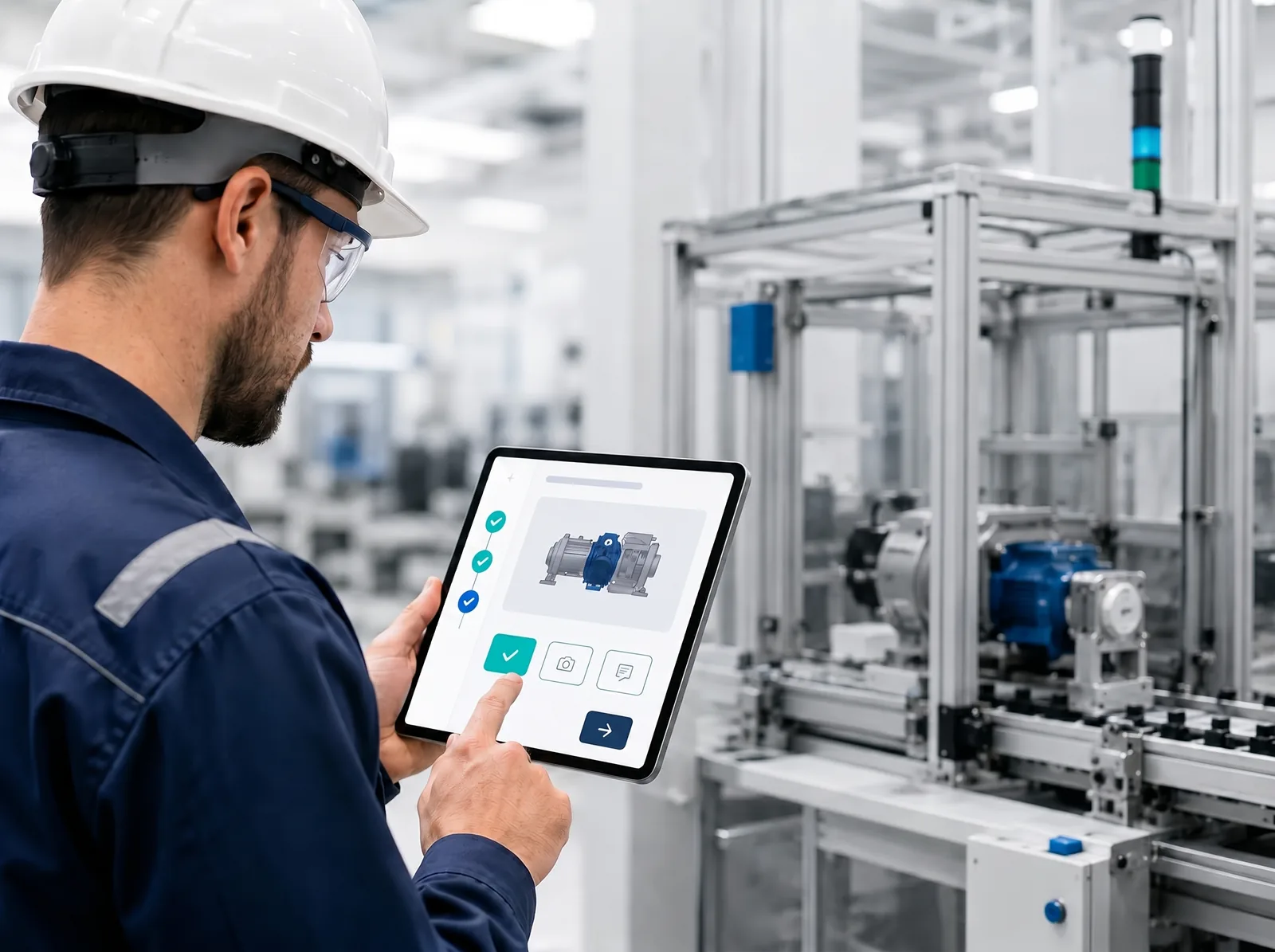
Engage frontline workers in the design of quality control workflows, validating that the documented SOPs are effective and understanding the critical usability issues for that worker. Focus on a usable interface that is visual, reduces or simplifies screen transitions and minimizes text data entry. If the digital process is more complex than the paper process it replaces, adoption will struggle regardless of the analytics behind it.
Close the Loop Between Plan and Execution
A persistent challenge in manufacturing quality is the drift between documented procedures, how work is actually done and what happens when there is a disconnect. The QMS has the approved SOP. On the floor, there is a binder that may or may not be current. A supervisor walks new workers through verbally. There is no reliable way to verify the procedure was followed, or to capture data that would allow you to improve it.
If the data is collected into the QMS, the second level challenge is to act upon it quickly. Closing that loop — execution to data to action — requires structured handoffs between the QMS and frontline execution platform. Each handoff needs defined process, mapping to each system and the consideration of how the data should be presented for the specific target users in such a way that data can drive action.

 SOP Documents
 Work Execution
 Inspection Data
 Quality Improvement
Map what data needs to be exchanged and where your data handoff points are. Who owns the source content? How does it reach the target user? Remember that initial data visibility can drive much faster adjustments in manufacturing process, even if the closed loop is not yet fully automated in phased implementations.
Prefer to read offline? Take the ebook with you.
Start with Consistency, Then Add Intelligence
A reliable implementation sequence matters. Attempting to digitalize all processes, deploy AI analytics, and integrate with a variety of systems all at once usually produces too much complexity for rapid adoption.
The first priority is consistent execution: replacing paper and informal processes with structured digital workflows that automate data capture and give real-time information visibility. This alone delivers measurable value. Once that foundation is stable, AI-assisted guidance and predictive quality tools can be phased in — with real operational data to learn from.

Start with processes that are commonly repeated or frequently used or that have the higher variability or greatest consequence. Prove value there first. That success builds the organizational confidence needed for broader rollout.
Apply the Same Rigor to Change Management as to the Project Itself
Frontline digitalization failures are rarely technology failures. They are adoption failures. Workers are often not involved in the design, are not given a clear reason for the change, or are handed a tool that makes their jobs harder.
The frontline workforce is not resistant to technology. They are resistant to tools that do not respect the practical demands of their work. Effective change management means involving respected frontline workers early, communicating clearly before go-live, and tailoring training to role and experience level.

Identify two or three frontline workers who are well-respected by their peers and involve them in design and testing from the start. Their endorsement carries more weight with the broader workforce than any communication from management. Create a pilot environment to refine the digitalization of quality processes and bring additional workers into the process as it is refined.
ROO.AI is a Frontline AI Platform that digitalizes human-powered processes in manufacturing, energy, and logistics — creating digital twins of frontline workflows and delivering AI-guided execution through a mobile-native app that works online and offline.
For quality teams, ROO.AI bridges the gap between what a QMS documents and what happens on the floor:
- Intuitive, easy digital inspections for In-process, Final and Customer Inspections
- Closed loop defect fix and QC verification workflows built in
- Automated tagging and categorization of defects with alerts and instant visibility
- Defect management with automated generation of defect history per unit
- Digital LPA, Supplier Audits and Materials receipt
- Customizable dashboards and reports tracking KPIs in realtime
- Equipment setup and maintenance, and calibration inspections
- AI Agent and Predictive Models integration into frontline workflows and analytics
Bring Your Quality Standards to the Point of Work
See how ROO.AI operationalizes your QMS on the floor — or take the full ebook with you.
The complete guide to extending your QMS to the frontline, as a PDF you can share with your team:
- The 5 field-tested best practices in one document
- The research behind the QMS-to-frontline execution gap
- A closed-loop model for plan-to-execution data
- A phased path from consistent execution to AI