
Calculate
Savings

Insights

SOP for Manufacturing: The Blueprint for Consistency and Quality Control

In the world of manufacturing, achieving operational excellence and maintaining quality control is a continuous endeavor. One of the keys to success in this journey is the implementation of Standard Operating Procedures (SOPs).

SOPs in manufacturing are more than just sets of instructions; they are a strategic approach to ensure consistency, streamline operations, and uphold the highest standards of health and safety in the industry. 

Let’s delve into the importance of SOPs, their role in the manufacturing process, and how digitized SOPs are revolutionizing manufacturing operations. But first, we need to define what an SOP in manufacturing is. 

What Is an SOP in Manufacturing? 

An SOP in manufacturing, or a Standard Operating Procedure, is a detailed, written set of procedures that guides the step-by-step execution of a specific task or operation within a manufacturing environment.

You can think of an SOP as a blueprint that ensures each employee performs their specific tasks consistently, reducing variability, enhancing quality control, and ultimately, contributing to the overarching goal of operational excellence.

Why SOPs in Manufacturing Are Essential for Operational Excellence

SOPs in manufacturing offer so many benefits that they are no longer optional. Instead, they are a fundamental necessity for achieving operational excellence. 

Here are some of the most important benefits that manufacturers can unlock: 

  • Streamline operations: An SOP in manufacturing serves as a guide, providing a clear and concise step-by-step procedure to accomplish specific tasks. This prevents confusion, reduces questions, and ultimately leads to improved operational flow and reduced downtime.
  • Improve consistency: Consistency is key in manufacturing. By clearly defining the method and process for each task, SOPs ensure that operations are carried out uniformly, regardless of who performs the task. This uniformity guarantees that the product quality remains consistent, enhancing customer satisfaction and trust.
  • Reduce waste: By specifying the exact process and quantities required for each operation, SOPs minimize the chances of errors and rework, effectively reducing waste. This not only saves resources but also contributes to environmental sustainability.
  • Increase efficiency: A well-written SOP manufacturing process acts as a roadmap for team members, clearly outlining roles and responsibilities, reducing the time taken to train new employees, and allowing for a smoother transition of roles within the team. This leads to an increase in efficiency and productivity.
  • Quick identification and correction of issues: SOPs provide a clear framework for identifying when things go wrong. By comparing the actual performance with the SOP, team members can quickly detect deviations and correct issues, leading to faster resolution times and improved productivity.
  • Regulatory compliance: Manufacturing industries often have to adhere to stringent regulatory standards. Comprehensive SOPs can help ensure that all operations are compliant with local, state, national, or even international regulations, thus avoiding legal complications and penalties.

In essence, effective SOPs can transform a complicated maze of operations into a well-oiled machine, and there is no shortage of real-world case studies that underscore this point. 

SOP Manufacturing Process Case Study: Molson Coors

One of the most compelling examples of the transformative power of SOPs in manufacturing can be observed in the actions of Molson Coors, a Canadian-American brewing giant. With a complex supply chain and numerous tasks to manage at each stage, the company saw an opportunity for optimization: implementing effective SOPs.

Over time, Molson Coors implemented SOPs across all their facilities and into every stage of the manufacturing process, from the initial brewing to the final packaging. 

As a result of implementing SOPs, Molson Coors reported a significant reduction in quality-related issues and lost-time incidents. Specifically, the company saw a 33% reduction in lost-time incidents and a 50% reduction in quality-related issues. The SOPs allowed for quick identification and correction of issues, leading to faster resolution times, improved productivity, and, ultimately, improved bottom line.

The Modern SOP: Digitized SOPs in Manufacturing

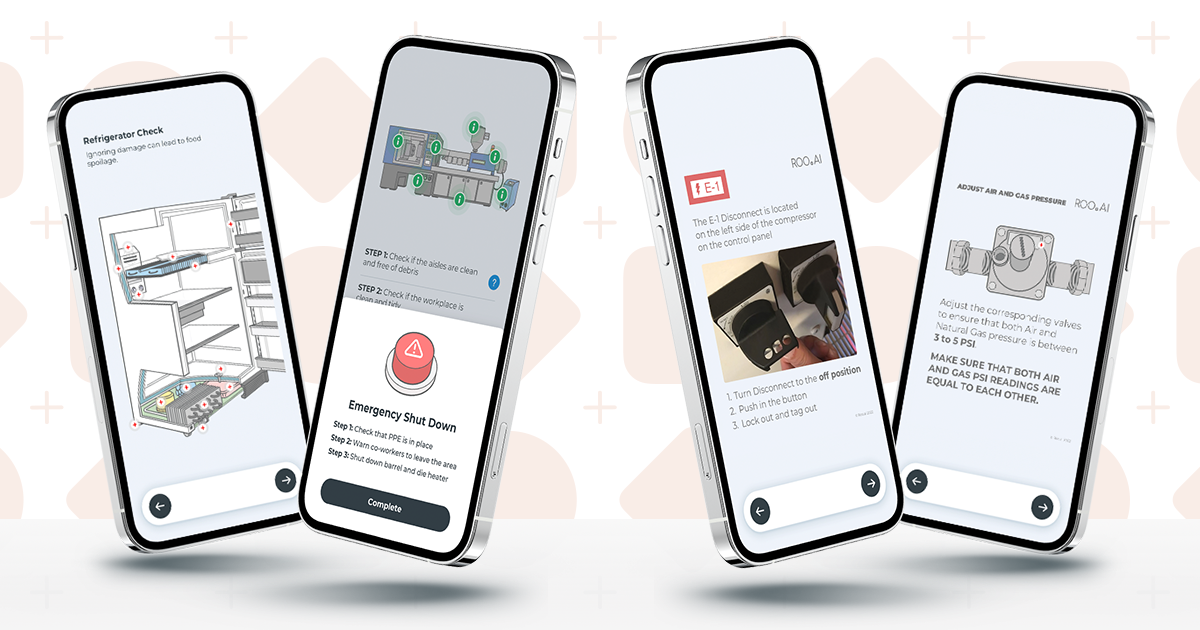
Traditionally, SOPs were paper-based documents, but with advancements in technology, we are witnessing a shift toward digitized SOPs. Such SOPs present information in an easy-to-digest format, which can significantly improve the employee’s comprehension and reduce the chances of misinterpretations or mistakes.

One platform that’s leading the charge in this digital transformation of SOPs is ROO.AI, whose functionality includes: 

  • Real-time data collection and analysis: By integrating with the existing systems, ROO.AI collects and analyzes data in real time, providing valuable insights for continuous improvement.
  • Collaboration: The platform encourages employees to share their insights and ideas, enhancing the work process and eliminating waste.
  • Change tracking: ROO.AI provides a system for tracking and implementing proposed changes, ensuring that the SOP manufacturing process remains current and effective.

As we move forward, tools like ROO.AI will continue to play a crucial role in transforming the manufacturing sector, driving efficiency, consistency, and quality in operations. Therefore, the adoption of digital SOPs in manufacturing should be a strategic priority for all manufacturing companies.

FacebookTwitterLinkedInMessengerShare

How to Create SOPs that Work for You?

Standard Operating Procedures (SOPs) play a crucial role in ensuring frontline work processes are performed consistently, safely, and efficiently, making it possible for businesses to deliver better products and services to their customers. 

Yet, the usefulness of SOPs is often greatly undermined by the medium through which they are communicated: paper. That’s because traditional paper-based SOPs are plagued with issues, including difficulties in keeping them updated, the inability to dynamically include tribal knowledge or the ease with which they can be damaged and lost. 

Additionally, paper-based SOPs don’t reflect the fact that people process visual information much faster than text. They force workers to read often lengthy descriptions of what to do instead of instantly showing them the same information using visual aids, such as videos, images, and diagrams.

SOP digitalization aims to overcome the limitations of delivering work instructions to the frontline on paper, but simply recreating paragraphs, checklists, and tables using a word processor isn’t sufficient since it leaves the issue of slow text processing by the human brain unaddressed. 

Instead, businesses need to combine digital delivery with visual guidance. Visual SOPs that incorporate a variety of different visual aids and are presented in an interactive form using modern digital devices can improve comprehension, retention, and engagement among workers. By adopting this approach, businesses can create SOPs that are not only more effective but also more appealing and enjoyable for workers to use.

Roadmap for Creating Powerful Digital SOPs 

The following roadmap provides a series of practical steps for creating visually-oriented digital SOPs that greatly outperform their paper-based counterparts, delivering so much value to frontline workers that their implementation never faces any resistance—quite the opposite. 

1. Set Your Goals

The first step in creating powerful digital SOPs is to determine what you want to accomplish by identifying the tasks that could benefit from standardization. The chances are that you will identify multiple tasks, and we recommend you always start with the most repetitive ones because they have the most significant impact on the overall efficiency of your processes. 

2. Define the Scope of the SOP

Next, you should define the scope of the SOP you’ve decided to start with. This involves identifying where the SOP will be used and who will use it. The goal here is to create more targeted and thus more relevant instructions. 

3. Include Frontline Knowledge

To achieve the best results when creating digital SOPs, you need to involve as many relevant people as you can. Frontline workers are especially important because they are closest to the processes and have invaluable knowledge and insights that should always be included in SOPs. 

4. Keep It Simple and Visual 

Digital SOPs provide the opportunity to present information in a visually engaging manner, and it’s paramount not to let this opportunity go to waste. It’s estimated that visuals are processed 60,000 times faster than text, so businesses should skip long chunks of text and use images, videos, and even voice recordings to deliver the message instead. 

5. Regularly Review and Update the SOP 

Even the most well-thought-out digital SOPs don’t remain accurate forever because processes, technologies, and best practices are constantly evolving. This is why businesses should revisit their SOPs every 6 to 12 months and update them if necessary. Frontline workers should be invited to suggest how the SOPs they work with could be improved—not just during the regular reviews but on an ongoing basis. 

Benefits of Digitalizing SOPs

Businesses that successfully digitalize their SOPs by following the roadmap above can unlock a number of important benefits, including: 

  • Increased productivity: Even seasoned employees sometimes forget the exact steps they need to follow to perform specific tasks, leading to wasted time and decreased productivity. With digital SOPs, workers have immediate access to step-by-step instructions, so they can always be sure of how to proceed. 
  • Cost savings: By reducing errors and minimizing downtime, digital SOPs can help businesses save costs. Real-time monitoring of the completion of digitalized SOPs and analysis of gathered data can help identify bottlenecks and inefficiencies to further optimize workflows and cut down on unnecessary spending. 
  • Greater accuracy: Clear visual guidance provided by digital SOPs can help employees avoid mistakes and perform tasks with a high level of accuracy. This, in turn, can help improve the quality of products and services, increasing customer satisfaction and enhancing the company’s reputation.
  • Improved safety: Digitalizing SOPs can significantly enhance safety by providing frontline workers with easy access to safety procedures and real-time alerts that reflect the current equipment status and other useful information. 
  • Shared knowledge: By effectively leveraging the knowledge of frontline workers and subject matter experts, digital SOPs help businesses continuously improve and innovate because past lessons never go to waste or, even worse, become forgotten. 

These and other benefits are why moving away from paper should be a top priority of every business that relies on SOPs. The good news is that it’s never been easier to create powerful digital SOPs thanks to next-generation digital assistance solutions like ROO.AI

Conclusion

Even in our digital age, many businesses still rely on mostly text-based SOPs documented on paper. Such SOPs don’t take full advantage of the large part of the human brain that is directly or indirectly devoted to processing visual information. Digital SOPs provide a modern alternative, but not all of them are created equal. To fully benefit from SOP digitalization, businesses need to follow the best practices described in this article instead of simply recreating the same old plaintext SOPs using a digital medium. 

FacebookTwitterLinkedInMessengerShare

Why Make Work Instructions Like Consumer Apps?

Work instructions are essential for ensuring that tasks are performed consistently and accurately within an organization, but their effectiveness can vary greatly depending not only on their content but also on their format. 

To overcome the limitations of traditional paper-based work instructions, which are tedious to use, difficult to update, and impossible to track effectively, organizations should look to consumer apps for important learnings on how to deliver work instructions that are smart, interactive, visual, and readily available when needed. 

Understanding the Consumer App Advantage 

Most companies don’t realize that simply making work instructions available on mobile devices in the form of PDF files or some other static document file format isn’t enough. 

Why? Because it doesn’t really deliver a significantly different experience for the frontline worker due in large part to poor usability, which leads to adoption issues.  Together, usability and adoption, are among the top reasons why 65 percent of manufacturing companies get stuck in the pilot phase of their frontline connectivity projects, according to a McKinsey study

In contrast, excellent usability is among the main reasons why consumer apps have become so widely adopted. Indeed, modern frontline workers now use their mobile devices for almost everything, from communication to online shopping to banking. 

Here are four key lessons organizations can learn from consumer apps to make their digital work instruction more effective:

  • Consumer apps are intuitive and enjoyable to use. Consumer app designers have a 2-minute rule: if the app isn’t understood and usable within 2 minutes, it won’t get used. Based on this rule, workers should be able to open their instructions and immediately understand what to do and why. If they need answers to a question, they should be able to get them quickly. Attaching manuals and long PDF documents on a mobile device doesn’t satisfy the 2-minute rule—only interactive visual work instructions that reflect the way in which the human brain is designed to process information do. 

  • Consumer apps are helpful and provide ongoing value. The most popular consumer apps are useful; they meet basic needs or deliver value better, faster, and easier; and they do it day after day. This is why they are used consistently. So if you want mobile work instructions to be used regularly instead of given one look and ignored, think about how to deliver ongoing value. How can the app be helpful to workers on a daily basis? How does it become something that they rely upon in the same way that office workers rely upon their platforms like Microsoft Office or Google Workspace?

  • Consumer apps take advantage of device-specific features. Today’s mobile users spend 90 percent of their online time in native apps. Such apps provide a more engaging experience by taking full advantage of native features. For example, push notifications can be used to deliver smart work instructions at the right time, while a built-in camera can be used to document task completion. 

  • Consumer apps are personalized to each user. Unlike static documents, mobile apps can deliver personalized interactive work instructions that reflect the location, experience, and progress of each user. Organizations can easily experiment with different sets of instructions to determine which set is the most effective. While doing so, they can track user engagement and collect many other metrics to help them make informed changes to their instructions. 

Appify Your Work Instructions With ROO.AI

Anyone can digitize paper-based work instructions to create forms with pictures or sharable PDF files that can be viewed on mobile devices. However, that’s not enough to capture the above-described consumer app advantage. To do that, work instructions need to be turned into an interactive mobile app with an intuitive visual interface to aid with comprehension and information retention. That’s where ROO.AI comes in. 

ROO.AI is a next-generation digital platform designed to empower manufacturers and other organizations to create smart work instructions that show workers exactly what they need to do and when they need to do it. 

Just like the most popular consumer apps today, ROO.AI boasts a fully visual user interface that reflects the latest design best practices to deliver an intuitive and accessible mobile-native user experience. Using ROO.AI, organizations can combine instruction with training, data collection, and messaging to deliver ongoing usefulness. What’s more, they can unlock frontline knowledge by collecting employee feedback and usage data right on the spot. 

Conclusion 

Frontline workers are already great at using mobile apps to get work done, so it makes sense to also use them for the delivery of work instructions. However, there’s a huge difference between using mobile devices as portable PDF readers and using them to provide workers with smart, interactive, and visual instructions delivered via a native mobile app. By incorporating the best practices of successful consumer apps with the breakthrough visualization and smart automation capabilities of ROO.AI, the digitalization of work instruction can be transformative for both the frontline workforce and the company.

FacebookTwitterLinkedInMessengerShare
This website utilizes cookies to remember your preferences and enhance our service. By continuing to use our site, you consent to our cookie policy.